US Letter, black on white, prints on any printer.
How to fill it in
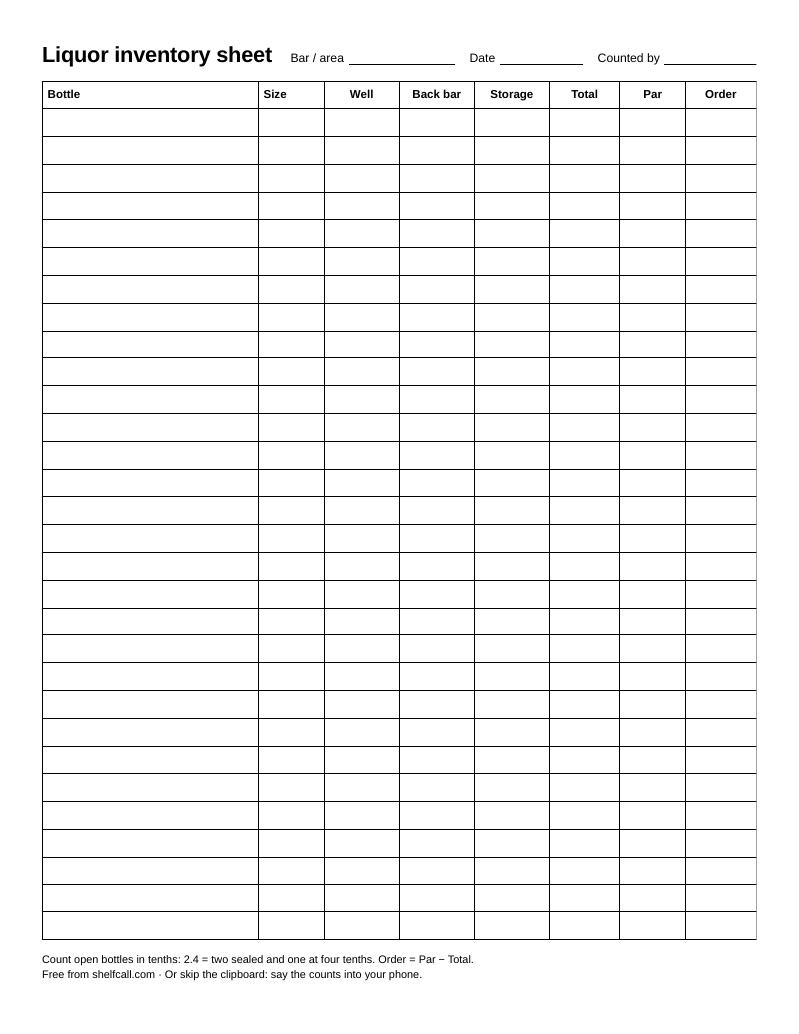
- List the bottles in shelf order, left to right, the way they sit. Then the count follows the shelf instead of hunting for rows.
- Count sealed bottles whole and open ones in tenths. 2.4 is two sealed and one at four tenths. The tenths chart turns each tenth into ounces.
- Add across for Total: well, back bar and storage together.
- Order = Par − Total. Not sure what par should be? The par level calculator works it out from your usage.
- Count at the same time each week, the same way, and keep every sheet. Last week's total is this week's start.
Want it as a spreadsheet?
The liquor inventory spreadsheet has the same columns and does the Total and Order math for you.
Skip the clipboard
Same counts, said out loud into your phone: “vodka, two point four”. ShelfCall types them into the sheet as you walk the shelf. Free for one area.
Questions
What should a liquor inventory sheet include?
A row for each bottle in shelf order, its size, a count for each area it lives in (well, back bar, storage), a total, a par and an order column. Room for the bar or area, the date and who counted keeps one week's sheet comparable with the next.
How do you count partial bottles on an inventory sheet?
Count sealed bottles as whole numbers and open ones in tenths, read by eye: 2.4 is two sealed and one at four tenths. The tenths chart turns each tenth into ounces and pours.
How often should a bar do liquor inventory?
Weekly is the common rhythm, at the same time each week, before open or after close. Monthly hides too much; daily is only worth it on your most expensive bottles.